For children and teenagers · ages 12–17
Olympiad Informatics — C++ and Algorithms
Your child learns to solve algorithmic problems in C++, estimate how fast a solution runs and think in the format of informatics olympiads.
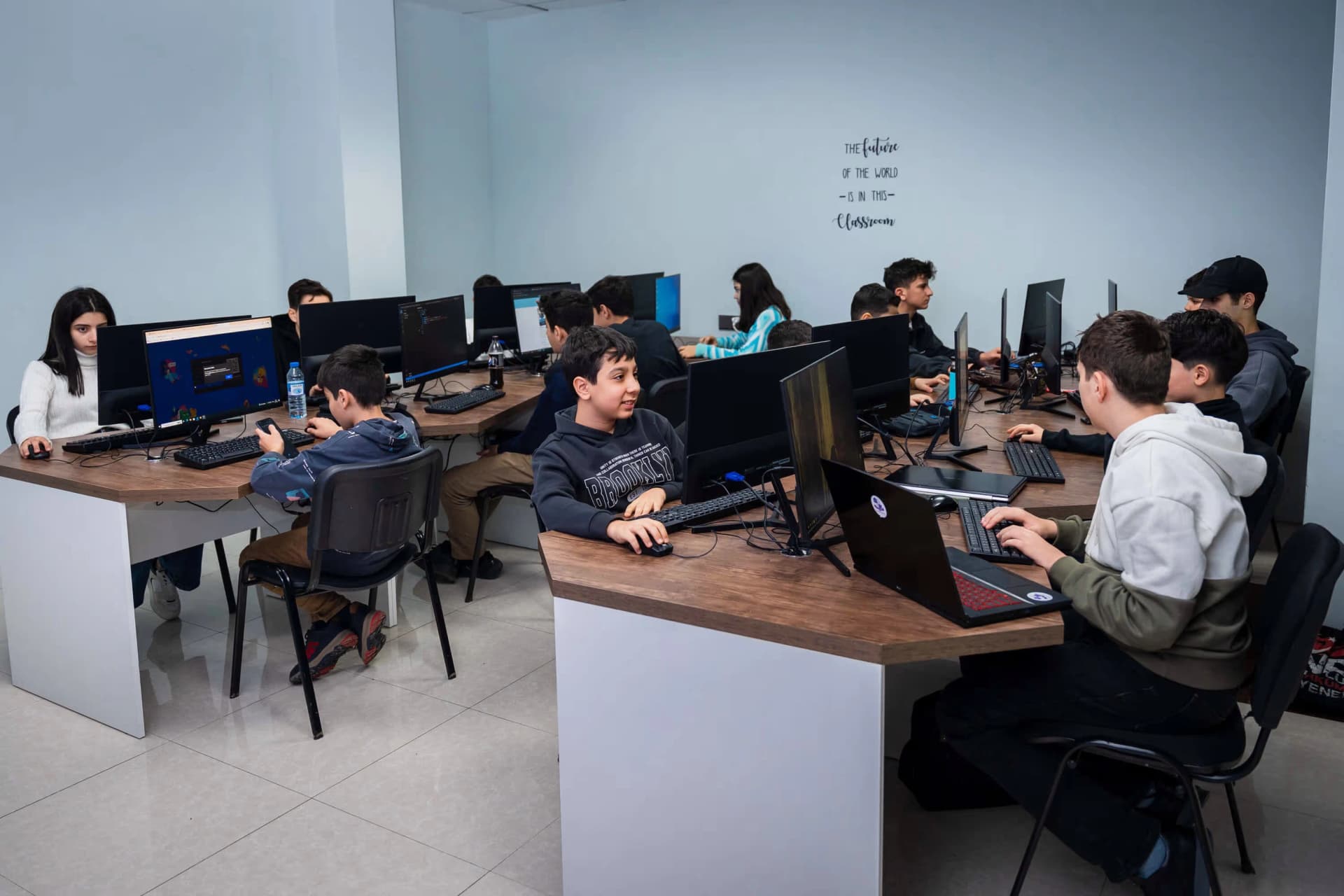
- Age
- 12–17
- Format
- In person
- Language
- Azerbaijani / Russian
Course outcome
What you will gain
- Writing clean C++ solutions with the STL
- Estimating algorithm complexity (Big-O)
- Applying search, sorting and recursion
- Solving problems with dynamic programming
- Solving path and connectivity problems with graph algorithms
- Choosing problems and checking solutions during a round
Programme overview
About the course
The course is for school students who enjoy mathematics and want to prepare for informatics olympiads. What matters here is not just a program that runs, but a correct solution that fits within the time limit.
C++ and the standard library
The student starts with input and output, conditions, loops, arrays, functions and strings, then moves on to the core STL structures (vector, set, map, queue, stack). These tools save time in a contest and make a solution easier to follow.
The speed of a solution is measured
Every algorithm is assessed by its complexity (Big-O): a solution may work on small inputs and miss the limit on large ones. The student measures this difference on sorting, binary search, prefix sums, two pointers, greedy algorithms, dynamic programming and graphs (BFS, DFS, Dijkstra).
Practice in contest format
In regular mock rounds the student picks problems, solves them and checks them against the clock. Each round ends with a written review: which idea worked, where the mistake was and which approach was faster. The course does not guarantee an olympiad result; it builds the thinking and the practice habit that lead to one.
The aim is not just a student who writes code but a young algorithmist who analyses a problem and justifies the most efficient solution.
Technologies and tools
- C++
- STL
- Algorithms
- Data structures
- Dynamic programming
- Graphs
Curriculum
Syllabus
Olympiad Informatics — C++ and Algorithms has 2 sections and 8 modules. Open a section to see its topics.
Foundations4 modules
- C++ basics: input/output, conditions, loops and arrays
- Functions, recursion and strings
- STL: vector, set, map, queue and stack
- Sorting and binary search
Practice and final project4 modules
- Prefix sums, two pointers and greedy algorithms
- Dynamic programming
- Graphs: BFS, DFS and Dijkstra
- Contest simulation and problem review
Simplified teaching model
Mürəkkəblik və vaxt limiti stendi
Eyni məsələ üçün dörd alqoritm və üç giriş ölçüsü seçərək təxmini əməliyyat sayını və vaxt limitinə sığıb-sığmadığını müqayisə edin.
The interactive model is in Azerbaijani.
Groups and enrollment
Before you choose
- Starting skills
- Choose a starting level that fits your experience and goals.
- Schedule and start
- Confirm class days, times, session length and start date.
- Group instructor and language
- Confirm your group’s instructor and teaching language.
- Equipment
- Ask what equipment you need and what the laboratory provides.
- Practice and assessment
- Review project examples and the assessment process.
- Enrollment terms
- Check what is included, payment and participation terms.
Next steps
- Send a course inquiry.
- Confirm a suitable group and participation terms.
- Before enrollment, confirm the time of the first on-site class and its room at the academy.
An inquiry is not automatic enrollment or payment.
Ask about a groupTopics and skills are curriculum goals; individual results depend on participation and completed work.
Baku · In-person classes
Venue
Academy address
116A Nasib bey Yusifbeyli Street, Narimanov, Baku AZ1025 (near Ganjlik metro station)
Opening hours: Monday–Friday: 09:00–18:00 · Saturday: 10:00–16:00
Frequently asked questions
Who is the Olympiad Informatics — C++ and Algorithms course for?
The course is taught for the matching age and level (12–17). Contact IT Innovations Academy for details. Address and WRO/achievements: /en/faq.
What languages is the course taught in?
Teaching languages: Azerbaijani / Russian.